All Categories
Featured
Table of Contents
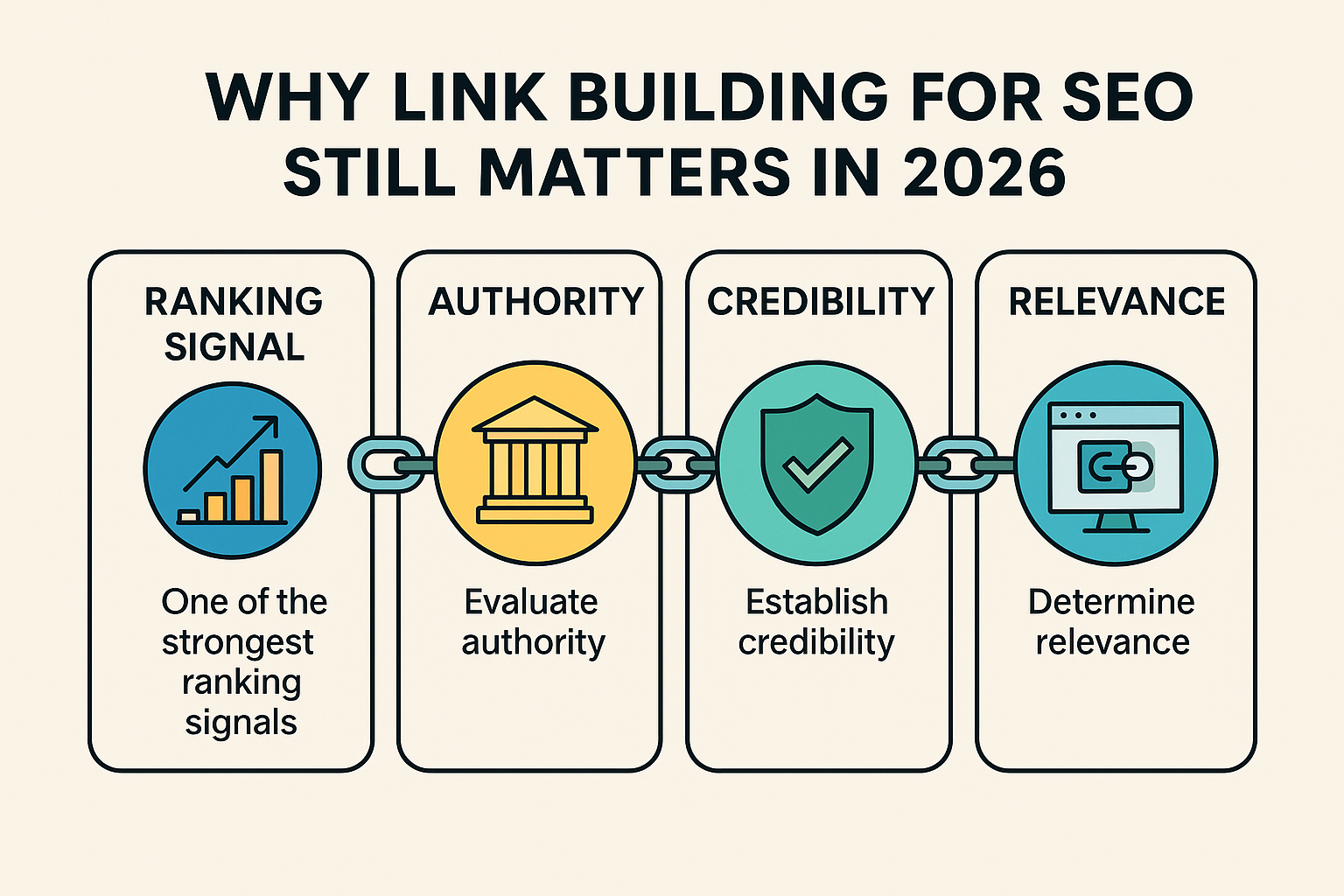
The 2026 Standard for Authority and Trust
The search environment in 2026 has actually transitioned away from basic mathematical metrics toward a design defined by proven proficiency and entity relationships. In previous years, a link was typically considered as a simple vote of confidence. Now, search algorithms treat a backlink as a data-rich bridge in between 2 acknowledged entities. If a link does not bring the weight of a confirmed author or a recognized topical leader, its impact on rankings is minimal. This change reflects a wider motion by online search engine to prioritize human-verified material over the huge influx of automated text that flooded the web over the last 2 years.
Establishing a profile that survives present algorithmic examination needs a focus on what is now called "contextual determination." Links that appear in temporary or low-traffic environments are discounted almost instantly. Rather, the focus has shifted to deep-site combination where a citation lives within the core material of a high-traffic resource. Success in the present market includes focusing on Ranking Power over mere volume. When a domain gets a citation from a source that online search engine already trust as a primary authority, the resulting boost in presence is much more substantial than what was seen in the past.
Browse engines now use "Neural-Semantic Link Graphs" to identify the validity of a backlink. These charts look beyond the anchor text to analyze the surrounding paragraphs, the history of the linking domain, and the particular proficiency of the individuals adding to that site. If a link originates from a page that lacks a clear expert-identity signal, it might be flagged as low-value despite the website's overall domain score. This makes the choice of partners and sources a matter of intense examination for anybody managing a digital existence in 2026.
The Shift Towards Semantic Significance and Entity Linking
The principle of "domain authority" has been replaced by "topical sovereignty." A site no longer has a single authority rating that uses to every page. Instead, a website may be a high-authority source for financial guidance but a low-authority source for technical hardware. Links are weighted based on this topical overlap. For example, a link from a prominent medical journal to a health-tech startup carries enormous weight, whereas a link from the very same journal to a realty company provides little to no benefit in 2026. This topical clustering ensures that search results page stay relevant and challenging to control through old-school link acquisition techniques.
Information from the early part of 2026 recommends that search engines are also looking at the "age of the relationship" between entities. Frequent, natural discusses in between 2 related companies over several months develop a stronger signal than a one-off positioning. This has actually resulted in a rise in long-term material partnerships where professionals work together on research study documents, whitepapers, and interactive datasets. Using high-level content syndication has ended up being a standard technique for ensuring that these relationships are documented and recognized by search spiders.
Proven Ranking Power Tactics now requires an advanced method to information attribution. It is no longer enough to simply be mentioned. The reference should be tied to a specific claim, fact, or unique insight that the target site provides. Online search engine have ended up being adept at recognizing "empty links" that serve no purpose other than SEO. These are now overlooked or, sometimes, result in a suppression of the page's capability to pass equity. The focus is entirely on utility. Does the link help the user find more comprehensive details that is not already present on the page? If the answer is no, the link provides no worth to the profile.
The Role of Expert Identity in Link Equity
Among the most considerable developments in 2026 is the combination of validated identity into the link graph. Online search engine now cross-reference the authors of connecting articles with professional databases, social profiles, and historic contributions. A post written by an understood expert in a field passes considerably more "trust juice" than an anonymous post or one generated by a basic AI design without human oversight. This has actually made the procurement of citations from acknowledged industry leaders the most in-demand objective in any link-building technique.
Establishing a footprint through Ranking Power for Top Positions creates the required trust signals for long-lasting presence. When an expert links to a resource, they are basically staking their expert track record on the quality of that info. The algorithms of 2026 are designed to discover this expert threat and reward it. This is why lots of organizations have moved far from generic outreach and towards building real relationships with the individuals who specify their markets. The human element of the web has ended up being the ultimate filter for quality.
Preserving Performance in a Post-Bot Environment
The sheer volume of content produced in 2026 makes it impossible for manual review to govern the whole web. Nevertheless, online search engine have executed "link-integrity filters" that operate at the crawl level. These filters examine the speed and pattern of brand-new links. If a website all of a sudden gains hundreds of links with similar anchor patterns, the system automatically isolates those links till they can be verified through secondary signals like user traffic or social engagement. This prevents the "burst" strategies that were typical a couple of years ago from providing any sustainable advantage.
Longevity is another crucial aspect. In the search landscape of 2026, the worth of a link really increases the longer it stays active and clicked. If a link exists however never ever receives interaction, online search engine conclude that it is either irrelevant or badly placed. This has moved the focus from "getting a link" to "putting a resource." The objective is to be the go-to referral that people in fact need to click to comprehend a complex topic. This is where strategic asset development becomes a required part of the procedure, as it concentrates on developing the types of pages that naturally bring in and keep attention.
Technical health likewise affects how a link profile is valued. If a site is sluggish, has poor mobile UX, or consists of broken scripts, the equity passed from its outbound links is reduced. Search engines do not wish to send users or authority through a "dripping" pipe. As a result, preserving a high-authority profile likewise suggests maintaining the technical quality of the pages where those links reside. This holistic view of the web implies that SEO can no longer be siloed into "on-page" and "off-page" classifications; whatever is interconnected.
The Future-Proof Link Profile
Looking towards completion of 2026, the most resistant profiles are those that show a "natural diversity" of source types. This does not indicate a random assortment of low-quality links. Instead, it means a mix of editorial mentions, citations in scholastic papers, recommendations in federal government datasets, and discussions on high-trust social platforms. A profile that counts on just one type of link is susceptible to the next algorithmic update. Diversity serves as a hedge against the shifting concerns of search engines.
Another emerging pattern is the "temporal relevance" of links. Search engines are starting to give more weight to links that are updated and maintained. If a post from two years ago is still being cited and its outgoing links are still precise and appropriate, those links gain a "seniority bonus." This motivates content developers to keep their details fresh and their citations present. Fixed, forgotten content is gradually being pushed to the periphery of the index, making room for "living" files that develop alongside their topic.
The dependence on verified citation building will likely increase as online search engine improve at detecting the distinction between a synthetic relationship and a genuine one. The systems are now searching for "co-citation" patterns. If Website A and Website B are often mentioned together in the same breath as a specific topic, they become connected in the entity chart even without a direct hyperlink between them. This "implied link" is becoming an effective signal in 2026, though it still requires the structure of a strong, conventional backlink profile to be completely recognized.
Strategic Combination of Content and Authority
Developing a high-authority profile is no longer a task that can be automated or outsourced to low-level companies. It requires a deep understanding of the industry and a dedication to producing high-value properties. The most successful companies in 2026 are those that treat their link profile as a reflection of their brand name's real-world authority. They concentrate on being the source of news, the supplier of information, and the voice of knowledge. When these elements are in place, the links follow naturally, and the profile becomes a powerful barrier to entry for competitors.

The 2026 search environment rewards those who add to the web rather than those who merely attempt to draw out value from it. By concentrating on energy, verified identity, and topical sovereignty, a site can construct a backlink profile that not just ranks well however likewise develops authentic trust with its audience. This trust is the most important currency in an age of automated noise. Those who comprehend this shift will find themselves at the top of the search results page, while those who hold on to the techniques of the past will discover their exposure slowly wearing down in a progressively advanced digital world.
Securing a location in the future of search needs a proactive stance. Keeping an eye on the health of an existing profile, cleaning up outdated or irrelevant citations, and constantly seeking new ways to offer worth are the hallmarks of a modern technique. The tools and algorithms will continue to alter, however the essential principle of the 2026 online search engine stays the very same: authority must be earned through consistent, verifiable quality.

Latest Posts
Leveraging High-Quality Link Assets for 2026 Marketing
How Strategic Mentions Impact Domain SEO
Creating a Scalable Outreach Framework in 2026